LIVESHIELD.
A name with a point of view. A line worth defending. A language system that makes security feel active.
Create a distinct verbal identity for a security offering backed by Per Mar—one that moves beyond passive monitoring and expresses prevention, awareness, and active protection. (Editorial context, not an excerpt.)
A declaration of posture.
The thinking behind the LiveShield name · Guidelines, PDF page 2
LiveShield is more than a service name — it is a declaration of posture. The name transforms security from something passive and observational into something active, intelligent, and responsive. “Live” introduces immediacy, awareness, and human presence, while “Shield” communicates protection, defense, and the idea of a visible boundary that should not be crossed. Together, the name creates a sense of real-time protection that is always engaged, always aware, and always ready to respond.
The brand language surrounding LiveShield reinforces this philosophy through concepts of perimeter, interception, deterrence, and defense. Rather than positioning security as static surveillance, LiveShield expresses a living system — proactive instead of reactive, advanced instead of invisible, and confidently protective without feeling aggressive. The result is a name that feels modern, intelligent, and technologically alive while still grounded in trust, strength, and reassurance.
The line you don’t cross.
The tagline and verbal meaning of the mark · Guidelines, PDF page 3
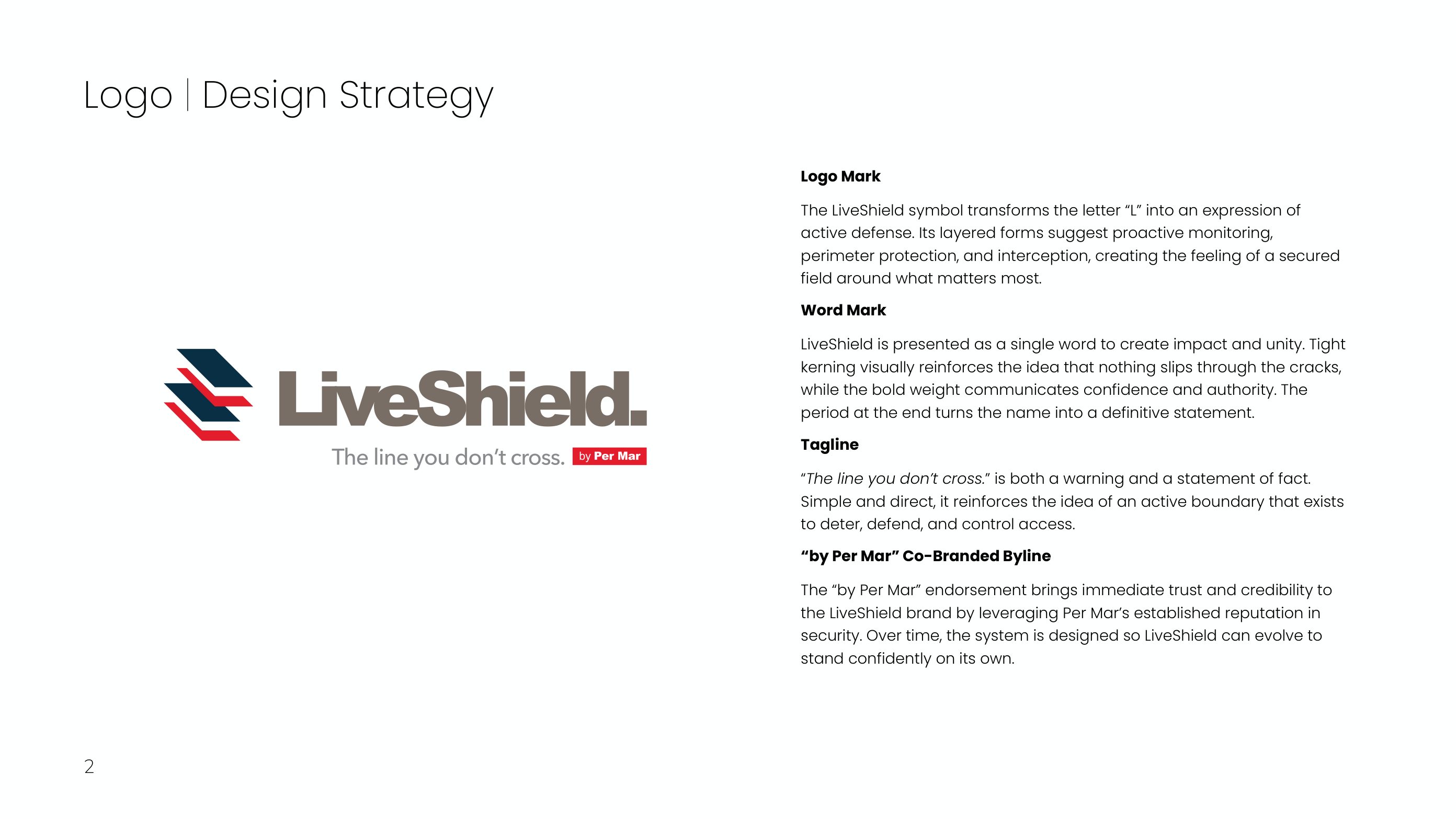
“The line you don’t cross.” is both a warning and a statement of fact. Simple and direct, it reinforces the idea of an active boundary that exists to deter, defend, and control access.
LiveShield is presented as a single word to create impact and unity. Tight kerning visually reinforces the idea that nothing slips through the cracks, while the bold weight communicates confidence and authority. The period at the end turns the name into a definitive statement.
From passive to alive.
A consistent vocabulary across audiences · Guidelines, PDF pages 11–12
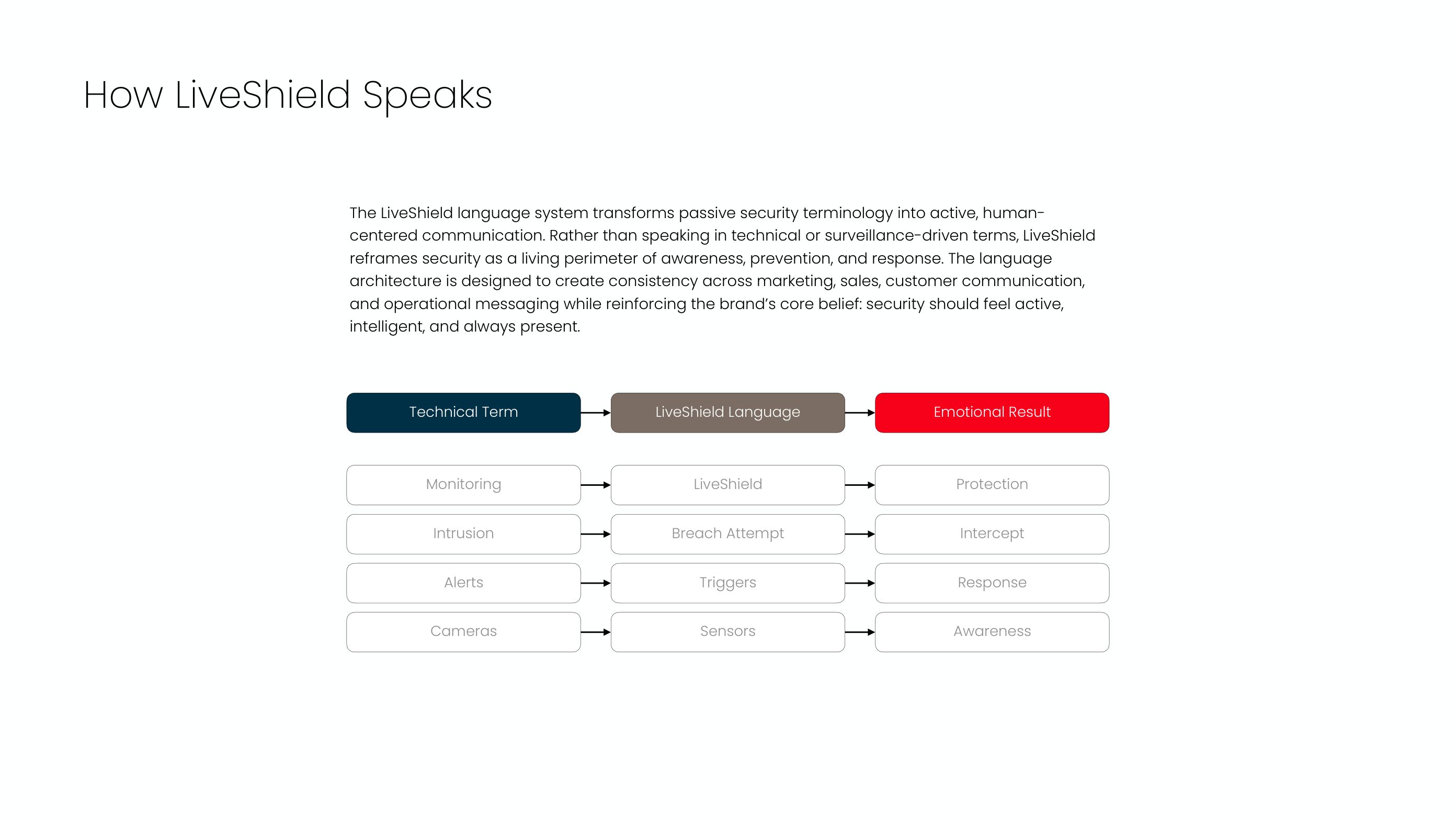
The LiveShield language system transforms passive security terminology into active, human-centered communication. Rather than speaking in technical or surveillance-driven terms, LiveShield reframes security as a living perimeter of awareness, prevention, and response. The language architecture is designed to create consistency across marketing, sales, customer communication, and operational messaging while reinforcing the brand’s core belief: security should feel active, intelligent, and always present.
| Technical term | LiveShield language | Emotional result |
|---|---|---|
| Monitoring | LiveShield | Protection |
| Intrusion | Breach Attempt | Intercept |
| Alerts | Triggers | Response |
| Cameras | Sensors | Awareness |
Marketing: “Your site is under LiveShield.”
Operations: “Breach attempt detected. Verbal intercept initiated.”
Customer Support: “Your property remains under active protection.”
One idea. Many voices.
From a name and a tagline to language that works in marketing, operations, and customer conversations. The writing gives a technical security offering a coherent human voice.
← Back to selected writing